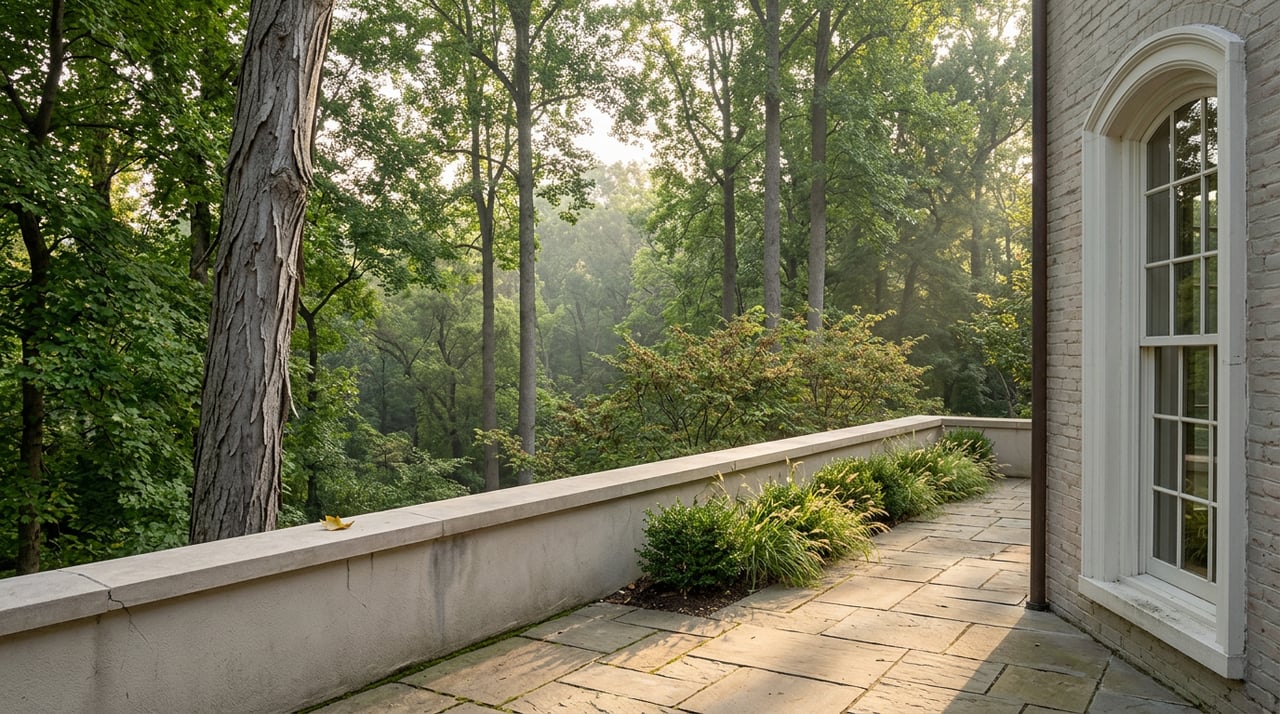
There is a two-mile trail behind a stretch of Randall Mill Road that climbs through hardwood forest and drops toward a creek, on land that belonged to one family for nearly seventy years. Lucinda Bunnen cut the trail herself, on foot, after Atlanta police stopped her for walking her dogs off leash at the Chattahoochee River National Recreation Area. She decided if she couldn't do it there, she'd do it on her own thirty acres instead. She hiked that loop into her nineties, sometimes twice a day, and called it a rite of passage if you got invited to walk it with her.
This summer the City of Atlanta closed on that land. If you've seen a headline calling it Buckhead's newest park, the word is doing more work than the facts support. What the city actually bought is something closer to the opposite of a park, and understanding why matters more than the acreage number if you live anywhere near Northwest Buckhead.
What Closed, and When
The sale finalized on June 30, 2026. The buyer was the City of Atlanta. The seller was The Conservation Fund, a national land trust that had purchased the estate at 3910 Randall Mill Road for $13.5 million back in October 2024, holding it for nearly two years while the city assembled financing. Fulton County deed records put the final sale price to the city at $7.8 million. City Council member Mary Norwood, who represents District 8, has said the broader funding effort, covering the Conservation Fund's hold and the city's acquisition, ran to roughly $15 million, split about evenly between Atlanta's Tree Trust Fund and private donations.
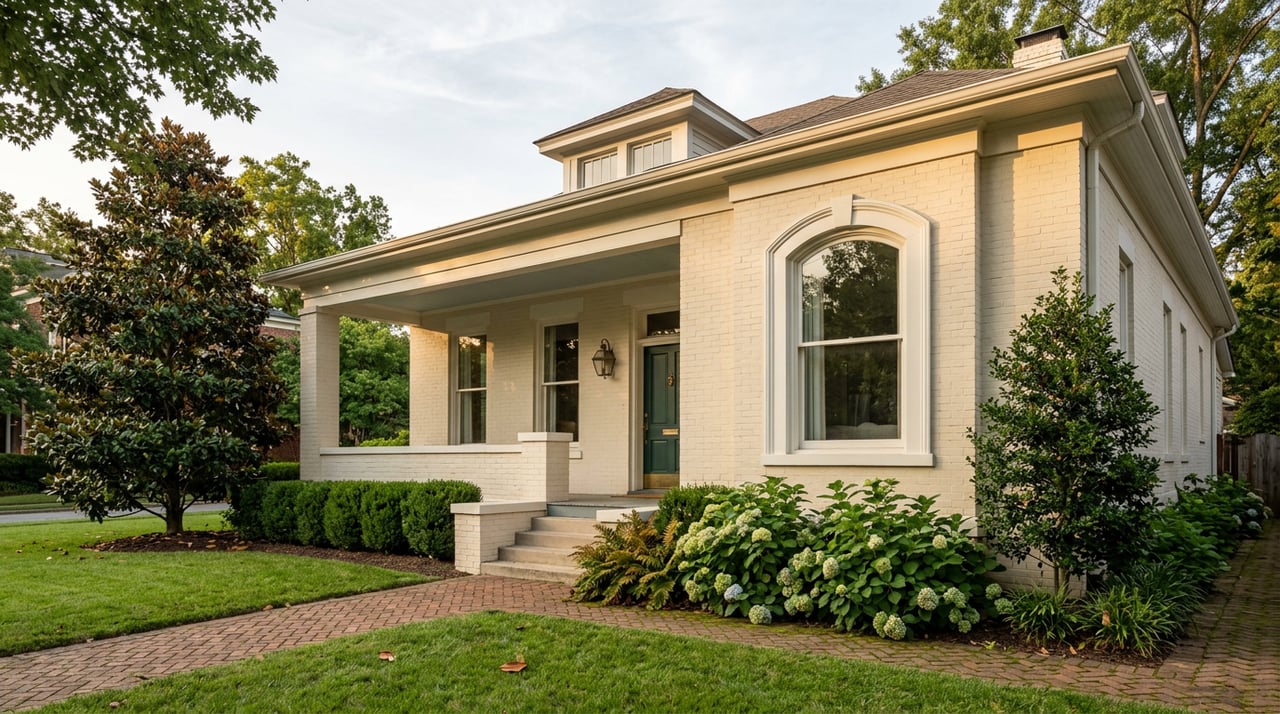
Thirty acres of unbroken forest inside the Perimeter is rare anywhere in the city. In Buckhead, where mature woodland tends to get subdivided into estate lots rather than preserved whole, it is close to unprecedented. The land includes a stretch of Little Nancy Creek, the two-mile trail Bunnen built, and the mid-century home she and her husband Bob bought in the late 1950s, designed by architect Cecil Alexander.
Why the Money Dictates the Outcome
Here is the detail that changes how you should think about this land: because Tree Trust Fund dollars paid for half the purchase, the forest is legally barred from the kind of development most people picture when they hear "new city park."
Atlanta's Tree Protection Ordinance charges developers a fee whenever they remove a healthy tree they can't replant on site. Those fees flow into the Tree Trust Fund, which the city can spend on planting, tree maintenance, or buying forested land for permanent conservation. Money from that fund comes with a condition attached. You cannot use it to clear trees for ball fields, playgrounds, or parking. Norwood was direct about the implication when she pointed the parks department to a model for how this property should be run.
"It was bought with Tree Trust Fund money, and you cannot take out trees when you use Tree Trust Fund, so it was very deliberate that this is not going to be something that we all of a sudden come up with these different activities."
So before a single trail sign goes up, the funding source has already answered the question of what this place will become. Not a Chastain Park. Something quieter, and by design, harder to change later.
The Model Is Cascade Springs, Not the BeltLine
Norwood pointed to a specific precedent: Cascade Springs, the large nature preserve on Atlanta's Southside, which the city runs with a secured perimeter and controlled access points rather than open gates and posted hours. She told the parks department to replicate that approach here, entry that's free but restricted, not a fee-gated amenity, but not a wide-open pass-through either.
What that means in practice for the Bunnen land:
- No ball fields, no playground, no programmed recreation
- A secured perimeter with limited points of entry, echoing Cascade Springs rather than a standard neighborhood park
- The existing two-mile trail network stays, largely as Bunnen left it
- The 1950s home is slated to eventually house an artist-in-residence program, with exhibitions on site
- No admission fee, but also no expectation of unrestricted foot traffic in and out
If you're picturing something you can wander into on a Tuesday evening the way you might swing through Chastain, recalibrate. This is being built to function more like a protected reserve than a public commons.
What Bunnen Actually Left Behind
The woman whose name this preserve will carry was not a passive owner of undeveloped land. Lucinda Bunnen was a photographer known widely as the "Godmother of Southern Photography," and she spent decades helping build the High Museum's photography collection. Over roughly fifty years, she and her family kept buying adjoining wooded parcels near their home until the property reached its current thirty acres, larger than Centennial Olympic Park and Woodruff Park combined.
She died in 2022 at ninety-two. Her children, Robb, Belinda Bunnen Reusch, and Melissa Bunnen Jernigan, chose preservation over a sale to developers, a decision that later earned the family Buckhead Heritage's Belle Turner Lynch Preservation Award. Her son Robb has said the family was relieved not to watch a dozen new mansions go up where their mother's trail used to run.
None of that history is decorative. It's the reason the property arrives already shaped for exactly the outcome the city is planning. The trail exists. The tree canopy exists. The restraint the city is now writing into policy is the same restraint Bunnen practiced for half a century on her own.
What Changes for You, and On What Timeline
If you live near Randall Mill Road, the honest answer right now is: not much, yet. The land is not open to the public. Securing the perimeter comes first, the same first step the city took at Cascade Springs. Council member Norwood has said trails could open to the public as early as 2027, with the artist-in-residence program following after that. Nothing about the announcement changes what you can walk into this month.
What has changed is more durable than a trail opening date. Thirty contiguous acres in one of the most development-pressured pockets of the city are now off the market for good, protected by a funding mechanism that makes reversal legally difficult. For a neighborhood where a wooded lot usually signals an opportunity for someone to build upward, that's a meaningfully different kind of news than another park ribbon-cutting.
Watch for updates through Livable Buckhead and the city's parks department rather than assuming the trailhead is ready when you drive past the gate. When it does open, expect a controlled entrance and a hushed, unprogrammed stretch of forest, not a second amenity park competing with Chastain for weekend foot traffic. That was the plan from the day the funding source was decided, long before the closing date arrived.
If you're weighing what a nearby, permanently protected green space means for a property near Northwest Buckhead, or you're simply trying to keep pace with how this part of the neighborhood is changing, the advisors at Engel & Völkers Atlanta know this pocket of the city block by block. Connect with an EV Advisor to talk through what's actually happening on your street.